Hasanuddin University’s Commitment to Sustainable Fisheries: Advancing Coastal Communities Through International Collaboration and Innovation
Hasanuddin University advances SDG 14 by offering free education and outreach that strengthen the sustainable management of fisheries, aquaculture, and tourism. The programmes combine classroom learning, field practice, and cultural exchange so communities and visitors understand how healthy ecosystems support local livelihoods and coastal resilience.
One gateway is the annual International Cultural Program for national and international participants. In 2024 Unhas introduced maritime culture to participants from 32 countries through activities such as learning seaweed based cuisine and observing coastal livelihoods. The sessions embed messages on responsible coastal tourism and resource stewardship so that participants can carry good practices back to their home institutions.
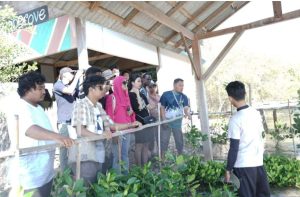
Science is brought to communities with practical tools. A public lecture on mangroves introduced environmental DNA and bioprospecting to show how biodiversity can be monitored without destructive sampling. Participants learned simple sampling and data literacy that can be applied in community patrols and school projects.
Training also targets active restoration. A coastal rehabilitation workshop in Makassar ended with hands-on mangrove planting by participants. The learning sequence moved from causes of shoreline erosion to nursery techniques and site selection so communities can repeat the activity with confidence. All sessions and planting materials were provided for free.
For fisheries management, Unhas and partners deploy artificial reef structures to rehabilitate and stabilize habitat in small-scale fishing grounds. The latest effort installed 190 large units and 50 smaller modules around Pulau Bonetambung, creating shelter and feeding spaces to support fish recruitment and local catches under monitored conditions. Community briefings explain placement ethics, no-take zones, and maintenance routines.
Capacity building continues through short courses in marine eco-ranching conducted with Shanghai Ocean University and Guangdong Ocean University. The curriculum integrates stock enhancement, artificial reef technology, monitoring methods, and governance for community managed sites. Participants practice surveying and basic data recording that inform adaptive rules for gear, seasons, and zones.
Local media have also highlighted this training collaboration. Readers can see additional reporting on the marine eco ranching course here: Harian Fajar. For broader context, see another open report on the same topic: Sindo Makassar.
All of these activities are delivered free of charge to communities, youth groups, and other trainees. Unhas provides trainers, learning kits, and follow up support so access to knowledge is not limited by cost barriers. This model aligns with the university’s public service mandate and ensures equitable access to skills in monitoring, restoration, and low impact tourism.
The education portfolio addresses the full pathway from awareness to practice. Cultural immersion builds respect for coastal ways of life. Public lectures introduce methods communities can use. Field workshops and reef deployments provide hands-on restoration. Technical courses link measurement to rules for sustainable harvests and visitor conduct.
Communities that engage in these programmes report stronger stewardship and clearer guidelines for fishing, aquaculture routines, and tourist activity. By improving habitat, strengthening local rules, and raising visitor awareness, Unhas helps protect life below water while sustaining the coastal economies that depend on it. This is how SDG 14 becomes a reality in daily practice across South Sulawesi.