

Sustainable Development Goals (SDGs) Center Universitas Hasanuddin


Hasanuddin University (Unhas) actively conducts educational and outreach activities for the community to raise awareness about responsible fishing, the use of environmentally friendly fishing gear, and the importance of ensuring the sustainability of fishery resources. These activities involve fishermen, coastal community groups, and fisheries extension workers through a practice-based approach and the application of technologies that support sustainable fisheries management.
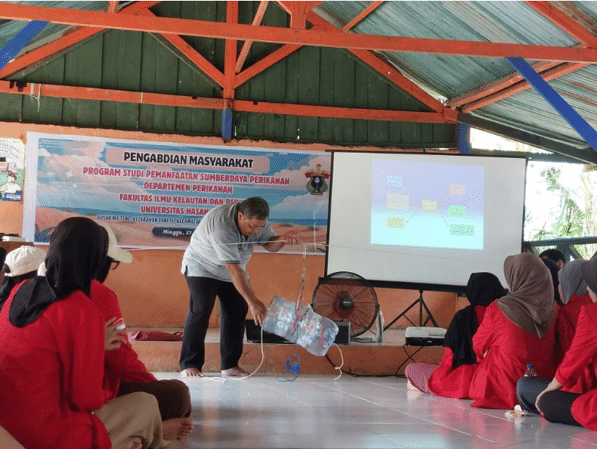
In 2025, the Capture Fisheries Study Program at the Faculty of Marine Sciences and Fisheries, Unhas, conducted an outreach program on environmentally friendly fishing technologies in Mate’ne Hamlet, Tanete Village, Barru Regency. Local fishers received education on the ecological impacts of fishing methods and were trained to construct and use fish traps made from recycled materials as sustainable alternatives to destructive fishing gear. The program strengthened community capacity to adopt fishing practices that protect aquatic habitats and maintain fish stocks.
Unhas also implemented a community empowerment program in Parepare, where fishers and women fish processors were trained in energy-efficient LED fishing technology as energy- and cost-efficient tools for gathering fish. The program includes field trials so that participants can gain firsthand experience applying the technology during fishing operations. Through the involvement of fishermen and fisheries extension workers, this program promotes more efficient use of technology and strengthens understanding of responsible fishing practices. The initiative also covered the processing of fish catch into value-added products, as well as strengthening administrative and digital marketing skills. This approach helps communities improve the efficiency of their fishing activities while developing more sustainable livelihoods.
In 2025, Unhas hosted the Annual Fisheries Management Unit (UPP) Meeting for Indonesia’s Fisheries Management Areas (WPPNRI 713, 714, and 715) as an educational outreach platform involving 136 participants, including provincial fisheries agencies, academics, fisheries associations, and strategic partners of the Ministry of Marine Affairs and Fisheries. The program promoted awareness of sustainable fisheries management, ecosystem-based fisheries governance, and the implementation of measured fishing (quota-based fishing) to prevent overfishing, illegal and unregulated fishing, and destructive fishing practices while improving the long-term welfare of coastal communities and fishers.