To Dashboard

Sustainable Development Goals (SDGs) Center Universitas Hasanuddin

Contacts
Location
Jl. Perintis Kemerdekaan KM. 10, Tamalanrea Indah, Kec. Tamalanrea, Kota Makassar, Sulawesi Selatan

17. PARTNERSHIP FOR THE GOALS

Have direct involvement in, or input into, national government or regional non-government organisations, SDG policy development – including identifying problems and challenges, developing policies and strategies, modelling likely futures with and without interventions, monitoring and reporting on interventions, and enabling adaptive management

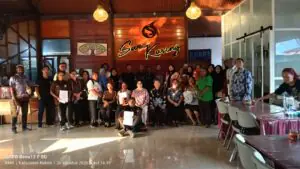
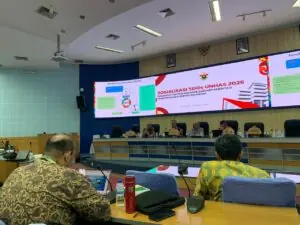
The UNHAS SDG Center actively collaborates with the South Sulawesi Government in SDG-related policy formulation and monitoring. In 2024, the SDGs Center worked with the South Sulawesi Regional Development Planning, Research, and Development Agency (Bappelitbangda) to prepare the 2025–2029 SDGs Regional Action Plan (RAD). This partnership began with coordination meetings at UNHAS to align technical approaches and strengthen local capacity for SDG planning and reporting. A follow-up meeting in December 2024 brought together Bappelitbangda and district planning agencies to emphasize cross-sector coordination. The SDGs Center also assisted in finalizing the 2023 Provincial SDGs Monitoring and Evaluation Report, which will serve as the foundation for the new RAD. Through these initiatives, UNHAS contributes to evidence-based policymaking and strengthens the integration of sustainable development in regional governance.

https://sdgscenter.unhas.ac.id/sdgs-center-unhas-dukung-penyusunan-rad-sdgs-2025-2029-di-sulawesi-selatan/

Initiate and participate in cross-sectoral dialogue about the SDGs, e.g. conferences involving government or NGOs

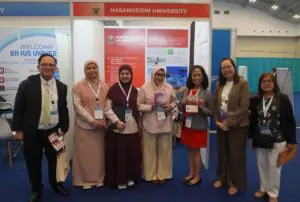
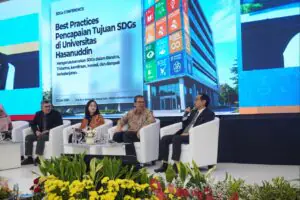
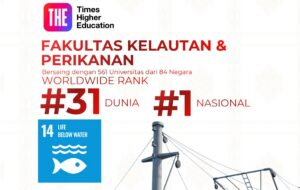
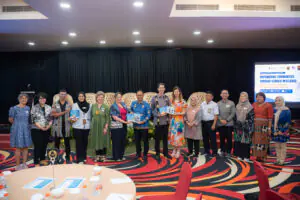
UNHAS initiates and participates in cross-sectoral dialogues on the SDGs, engaging government, academia, NGOs, and international partners. In October 2024, the Institute for Research and Community Service (LP2M) held the 3rd International Conference on Environment & Sustainable Development themed “The Green Technology Framework on Environmental Science and SDGs Policy.” Over 260 participants and international speakers from Japan, China, Malaysia, and the US discussed innovations in green technology and sustainable solutions. The 11th National and 7th International Symposium on Marine and Fisheries on “Exploring the Main Problems and Effective Solutions in the Marine and Fisheries Sector toward the Achievement of SDG 14” organised by the Faculty of Marine Sciences and Fisheries in June 2024 brought together national and international experts, researchers, and NGOs to share findings, strengthen networks, and develop strategies for marine and fisheries sustainability.

https://www.unhas.ac.id/lppm-unhas-gelar-konferensi-internasional-tentang-lingkungan-dan-pembangunan-berkelanjutan/?lang=id

https://www.unhas.ac.id/unhas-selenggarakan-simposium-nasional-dan-internasional-bahas-tentang-sdgs-14-ekosistem-lautan/?lang=id

Participate in international collaboration on gathering or measuring data for the SDGs

UNHAS regularly engages in international collaborations on data gathering and research to support the SDGs. In 2024, UNHAS launched and now leads the PAIR Sulawesi Program, a consortium with the Australia–Indonesia Centre (AIC), Sulawesi Regional Government, and partner universities. Supported by the Indonesian Endowment Fund (LPDP) and Australia’s DFAT, the program focuses on climate change and coastal communities, with three priorities: circular economy solutions, net-zero emissions in health facilities, and climate–health integration. It strengthens evidence-based policymaking through joint data collection and research. UNHAS researchers also collaborate with partners from Japan and Thailand under the e-ASIA Joint Research Program to assess the carbon potential of coastal ecosystems. The study measures blue carbon data for climate mitigation and develops mechanisms to include these ecosystems in national carbon offset policies, supporting sustainability and local community welfare.

https://www.unhas.ac.id/unhas-jadi-tuan-rumah-program-bilateral-australia-indonesia-pair-sulawesi/?lang=id

https://www.the-easia.org/jrp/projects/project_101.html

Through international collaboration and research, review comparative approaches and develop international best practice on tackling the SDGs

UNHAS has a strong focus on international collaboration and research to develop best practices for tackling the SDGs. In 2024 the Faculty of Marine Sciences and Fisheries held a hybrid kick-off seminar  for the “Marine Ranching Demonstration Project” with Shanghai Ocean University and Guangdong Ocean University which will implement artificial reefs and sea-ranching in the Spermonde Archipelago to support marine biodiversity conservation and SDG 14 (Life Below Water). UNHAS also supported the Makassar City learning exchange with Maniwa City, Japan as part of its commitment toward becoming a low-carbon city. The partners shared best practices in low-emission development, renewable energy, and adaptive governance, evaluating comparative approaches for local climate action. Through such collaborations, UNHAS fosters cross-border cooperation, shared knowledge, and international best practices for sustainable development.

https://www.unhas.ac.id/fikp-unhas-kerja-sama-riset-dan-akademik-dengan-china/?lang=id

https://sdgscenter.unhas.ac.id/unhas-awali-kerja-sama-dengan-pemerintah-kota-makassar-dan-maniwa-jepang-menuju-masyarakat-rendah-karbon/

Collaborate with NGOs to tackle the SDGs through: student volunteering programmes, research programmes, or development of educational resources

UNHAS frequently collaborates with NGOs to tackle the SDGs through research, student initiatives, and community-based educational programs. One of the innovative programs in 2024 was run by the UNHAS Center for Disaster Studies in partnership with the NGO Indonesian Marine Conservation Foundation (YKL), Swinburne University of Technology, and local coastal communities. This  digital empowerment program began with a participatory needs assessment in Barrang Caddi, Galesong, and South Galesong. The initiative then created an open digital platform to strengthen community resilience, improve access to information, and support sustainable resource management. The program also included the development of a participative model including educational resources to support further outreach. This collaboration highlights UNHAS’ role in mobilizing students, academics, and NGOs to co-create solutions for sustainable development.

https://www.unhas.ac.id/unhas-berperan-dalam-inisiasi-program-digital-pemberdayaan-masyarakat-pesisir-sulsel/?lang=id

UNHAS’ SDG Report in 2024 : click here to download

  • SDG 1 – No Poverty

Information about SDG 1 is reported as part of Universitas Hasanuddin Sustainability Report 2024, on pages 29, 30 and 36

  • SDG 2- Zero Hunger

Information about SDG 2 is reported as part of Universitas Hasanuddin Sustainability Report 2024, on pages 29, 30, 32 and 36

  • SDG 3 – Good Health and Well-being

Information about SDG 3 is reported as part of Universitas Hasanuddin Sustainability Report 2024, on pages 9, 10, 17, 18, 43 and 44

  • SDG 4 – Quality Education

Information about SDG 4 is reported as part of Universitas Hasanuddin Sustainability Report 2024, on pages 3, 4, 5, 9, 10, 13, 14, 15, 16, 21, 22, 35, 36, 37 and 38

  • SDG 5 – Gender Equality

Information about SDG 5 is reported as part of Universitas Hasanuddin Sustainability Report 2024, on pages 3, 4, 5, 16, 24 and 39

  • SDG 6 – Clean Water and Sanitation

Information about SDG 6 is reported as part of Universitas Hasanuddin Sustainability Report 2024, on pages 17, 18, 23, 31, 33, 34, 36, 41 and 42

  • SDG 7 – Affordable and Clean Energy

Information about SDG 7 is reported as part of Universitas Hasanuddin Sustainability Report 2024, on pages 36 and 39

  • SDG 8 – Decent Work and Economic Growth

Information about SDG 8 is reported as part of Universitas Hasanuddin Sustainability Report 2024, on pages 16, 23, 36, 37, 38, 39, 40, 41 and 42

  • SDG 9 – Industry, Innovation and Infrastructure

Information about SDG 9 is reported as part of Universitas Hasanuddin Sustainability Report 2024, on pages 11, 12, 18, 26, 32, 33 and 44

  • SDG 10 – Reduced Inequalities

Information about SDG 10 is reported as part of Universitas Hasanuddin Sustainability Report 2024, on pages 3, 4, 5, 9, 10, 13, 15, 16, 24, 35, 36, 39, 41, 42, 43 and 44

  • SDG 11 – Sustainable Cities and Communities

Information about SDG 11 is reported as part of Universitas Hasanuddin Sustainability Report 2024, on pages 13, 18, 21, 22, 23, 25, 26, 37, 38, 40, 41, 42 and 44

  • SDG 12 – Responsible Consumption and Production

Information about SDG 12 is reported as part of Universitas Hasanuddin Sustainability Report 2024, on pages 27, 29, 30, 33, 34, 39 and 40

  • SDG 13 – Climate Action

Information about SDG 13 is reported as part of Universitas Hasanuddin Sustainability Report 2024, on pages 14, 27, 28, 32, 33, 34, 36, 40 and 44

  • SDG 14 – Life Below Water

Information about SDG 14 is reported as part of Universitas Hasanuddin Sustainability Report 2024, on pages 11, 12, 14, 23, 27, 28 and 36

  • SDG 15 – Life on Land

Information about SDG 15 is reported as part of Universitas Hasanuddin Sustainability Report 2024, on pages 36, 37, 38 and 39

  • SDG 16 – Peace, Justice and Strong Institutions

Information about SDG 16 is reported as part of Universitas Hasanuddin Sustainability Report 2024, on pages 9, 10 and 36

  • SDG 17 – Partnerships for the Goals

Information about SDG 17 is reported as part of Universitas Hasanuddin Sustainability Report 2024, on pages 3, 4, 5, 11, 12, 14, 16, 21, 22, 24 25, 26, 35, 36, 39, 40 and 44

Have a commitment to meaningful education around the SDGs across the university, relevant and applicable to all students

UNHAS is committed to mainstreaming meaningful SDG-focused education by integrating the SDGs into curricula and learning outcomes across the university. This commitment has been formalized through a Rector’s Regulation requiring all undergraduate programs to align their curricula with advances in science, technology, and the arts and with national development needs that support the SDGs (Article 3, Paragraph 2). The regulation ensures that sustainability principles are embedded in teaching across disciplines. For example, in the Faculty of Public Health, the course Current Issues in Epidemiology includes a learning outcome that requires students to describe SDG-related issues and SDG indicators, with course content discussing SDG-related epidemiological challenges. Through such academic integration, UNHAS prepares students to understand and contribute to sustainable solutions in their respective fields.

https://sdgscenter.unhas.ac.id/peraturan-rektor-pedoman-penyelarasan-kurikulum-program-sarjana/

https://kesmas.fkm.unhas.ac.id/wp-content/uploads/2023/10/Disaster-Managemen.pdf

Have dedicated courses (full degrees, or electives) that address sustainability and the SDGs.

UNHAS is committed to mainstreaming sustainability in education and embedding the SDGs into its academic programs. The university offers dedicated courses and graduate programs that address sustainability across social, economic, and environmental dimensions. At the Master’s level, the Gender and Development program strengthens students’ ability to design and analyze gender-responsive policies, integrating equality and sustainability into development planning. UNHAS also offers the Master’s Program in Agricultural Systems, which prepares graduates to develop models of integrated and sustainable agriculture that enhance productivity and environmental balance. The program promotes research and innovation in agricultural science and technology, enabling graduates to apply and share knowledge that supports sustainable farming systems. Through these programs, UNHAS demonstrates its strong academic commitment to advancing sustainability-focused education.

https://portal.pasca.unhas.ac.id/s2-gender-dan-pembangunan/

https://portal.pasca.unhas.ac.id/s2-sistem-sistem-pertanian/

Have dedicated outreach educational activities for the wider community, which could include alumni, local residents, displaced people

UNHAS is committed to empowering local residents and displaced people through inclusive education and outreach, with many dedicated outreach educational activities to support alumni, local communities and marginalized groups. In November 2024 the Faculty of Public health community outreach program held a series of 24 community outreach and education events focused on SDGs 3 (health and wellbeing), 4 (quality education) and 11 (sustainable cities and communities) providing benefits to over 800 local people. In March 2024 the Faculty of Law partnered with the International Organization for Migration (IOM) to hold a talk show “Getting to Know Foreign Refugees in Makassar.” Attended by more than 200 people, including refugee representatives, this event  enabled refugees to share their experiences, culture and challenges, engaging with academics, policymakers, and the public. These initiatives highlight UNHAS’ commitment to inclusion and empowering local residents and displaced people.

https://fkm.unhas.ac.id/fkm-unhas-gelar-rangkaian-kegiatan-pengabdian-masyarakat-di-maros-baru-wujudkan-indonesia-sehat-2045

https://sdgscenter.unhas.ac.id/fh-unhas-dan-iom-un-migration-gelar-talk-show-festival-budaya-angkat-isu-pengungsi-di-makassar/

UNHAS integrates sustainability and SDG-related concepts across its academic programs to strengthen student understanding of sustainable development. In addition to knowledge acquisition this approach emphasizes comprehension of sustainability concepts and principles and the ability to apply them in real-world contexts through course projects, fieldwork, and community service. Student literacy in sustainability is evaluated through methods tailored to each discipline, including self-assessment, reflective assignments, project-based evaluations, conventional tests and surveys. Feedback from lecturers and community partners involved in field-based programs provides qualitative insights into student ability to translate theory into practice. A 2024 assessment of provided quantitative evidence of overall high/very high student, staff and lecturer SDG literacy while highlighting gaps and identifying priorities for further enhancing student sustainability literacy across disciplines.