

Sustainable Development Goals (SDGs) Center Universitas Hasanuddin


Hasanuddin University (UNHAS) actively carries out community outreach programs focused on freshwater ecosystem education, water resource management, conservation, and sustainable aquaculture practices. Through collaboration with local governments, research institutions, industry partners, fisheries extension workers, and the community, UNHAS transforms research findings into educational activities that enhance the public’s knowledge and capacity to maintain the sustainability of freshwater ecosystems.
One concrete example of these activities is a community service initiative organized by Aquaculture Study Program of the Faculty of Marine Sciences and Fisheries at the Bantimurung Fish Hatchery (Balai Benih Ikan/BBI) in Maros Regency. This program trains fish farmers, fisheries extension workers, and stakeholders on sustainable tilapia aquaculture, including innovative sex-reversal techniques using sea cucumber by-products. In addition to improving aquaculture production efficiency, this initiative also educates the community on waste management, the wise use of aquatic resources, and the importance of environmentally friendly aquaculture practices as part of sustainable freshwater ecosystem management.
In addition to community service activities, UNHAS is also strengthening public education through the Lake Matano Biodiversity Expedition 2025, conducted in collaboration with CPalim and PT Vale Indonesia. This expedition studies the biodiversity of Lake Matano, one of Indonesia’s ancient freshwater ecosystems, by exploring its aquatic ecosystem, riparian zones, and the surrounding terrestrial environment. The research documents endemic fish and crab species; aquatic vegetation such as hydrilla; and riparian flora, generating scientific knowledge on Lake Matano’s high ecological value and the importance of conserving it. The expedition’s findings were subsequently disseminated as an educational resource for students, academics, stakeholders, and the public to raise awareness about biodiversity conservation and the sustainable management of freshwater ecosystems. In line with these efforts, students participating in Hasanuddin University’s Thematic Community Service Program (KKN-T) 114, in partnership with PT Vale Indonesia Tbk, conducted a community outreach program entitled “Lake Matano Restoration: The Role of Communities in Controlling Hydrilla verticillata and Invasive Fish.” The program sought to strengthen environmental awareness among communities around Lake Matano by highlighting the importance of protecting freshwater ecosystems, promoting responsible management of invasive species, and encouraging active community involvement in ecological restoration.
UNHAS’s commitment to water resource conservation is also demonstrated through the development of HYDROIN (Hasanuddin Rainwater Innovation) and the organization of the public lecture “Rainwater: A Neglected Resource.” Through these two initiatives, students, practitioners, and the public gain an understanding of rainwater harvesting, the 5M concept (Collect, Treat, Drink, Save, and Be Self-Sufficient), and the application of conservation technologies such as infiltration wells, biopores, and recharge pits. This education promotes behavioral change toward efficient water use, reduces dependence on groundwater, and strengthens awareness of the importance of maintaining the hydrological cycle and the sustainability of freshwater resources.
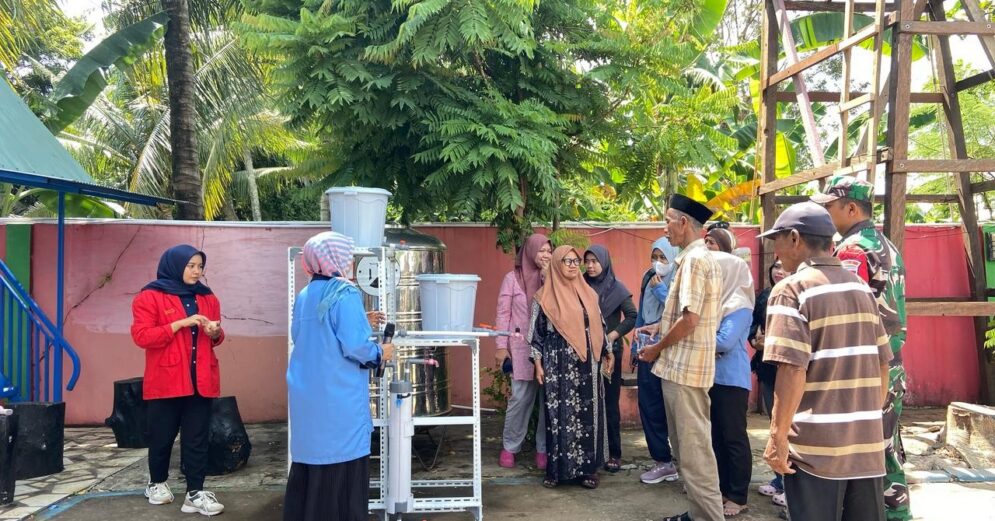
In an effort to expand its impact on the community, UNHAS—through its Institute for Research and Community Service in collaboration with the Faculty of Public Health—also implemented an empowerment program in Cilellang Village, Barru Regency. This initiative combines educational sessions on the importance of clean water with hands-on training in water treatment using natural materials such as moringa seeds, activated charcoal, pumice, and silica sand. Community members not only gain knowledge but also receive water treatment units as part of a technology transfer initiative, enabling them to independently and sustainably manage clean water according to local needs.
Through the integration of community service programs, water management innovations, training in appropriate technologies, and the dissemination of research findings, Hasanuddin University demonstrates a strong commitment to providing educational programs on freshwater ecosystems for both local and national communities. This approach not only enhances community literacy and capacity but also strengthens multistakeholder collaboration in supporting the conservation and sustainable management of freshwater resources.