

Sustainable Development Goals (SDGs) Center Universitas Hasanuddin


Hasanuddin University continues to advance SDG 14 through community-first education (Pengabdian kepada Masyarakat; PkM) programmes that strengthen freshwater stewardship as the upstream foundation of healthy rivers, estuaries, and coastal fisheries. These initiatives combine scientific literacy, hands-on training, and appropriate technology so communities can manage water wisely, reduce pollution at the source, and protect aquatic biodiversity. All activities are delivered free of charge to participants as part of the Unhas community service mission
 .
.
Community-Based Freshwater Initiatives
UNHAS reaches directly into communities with impactful initiatives. Inovokasi 2024, run by the Unhas Vocational Faculty’s Aquaculture and Post Harvest Technology programme, helped milkfish farmers in Maros to improve pond aquaculture performance by using formulated feed enriched with mixed microorganism probiotics. The training emphasized that improved feed conversion and cleaner water mean lower nutrient loading in connected waterways, safeguarding downstream habitats.
In Desa Pacellekang, Gowa, the Aquaculture Study Programme partnered with the village-owned enterprise to strengthen freshwater crayfish culture. Sessions focused on practical water quality control including temperature, pH, dissolved oxygen, carbon dioxide, ammonia, and hardness. Farmers linked daily measurements to healthier stocks and reduced effluent, then applied the methods during field visits to ponds.
A multidisciplinary community partnership team from Unhas (physics, fisheries, and agriculture) trained youth groups in Pangkep on automated aquaponics systems with Internet of Things monitoring. Integrating fish culture and hydroponic vegetable growing in a closed loop system reduces water use and waste discharge. Open and free to local participants, this replicable training module enables participants to become green entrepreneurs, helping to conserve freshwater ecosystems.
Clean water education also addresses access. A Thematic Student Community Service Program (Kuliah Kerja Nyata Tematik; KKNT) introduced Electrical Resistivity Tomography to help communities in Bulukumba map subsurface freshwater for reliable drinking water. The outreach paired a pre-test and post-test with demonstrations to verify that residents could identify new water sources, supporting nutrition and public health while easing pressure on surface waters. Participation and materials were provided for free.
Innovation emerges from local materials. A student team transformed discarded corn cobs into a community water purification device, demonstrating adsorption principles with a low cost, recyclable medium. The pilot project with residents in Makassar shows how education, design, and citizen testing can raise water quality while reducing organic waste. Training and prototypes were shared at no cost to households.
Across these settings, Unhas applies the same playbook. Diagnose local needs with villagers and youth groups, teach them fundamentals underlying aquaculture, hydrology, and water chemistry, and co-design simple practices that communities can maintain. This approach is inclusive, evidence based, and action oriented, ensuring that knowledge moves from the classroom to the pond, greenhouse, or village hall without financial barriers for participants.
The emphasis on freshwater is central to SDG 14. By upstream improvements to feed efficiency and pond chemistry, the programmes curb nutrient spills that drive eutrophication and algal blooms downstream. By expanding aquaponics and groundwater literacy, they reduce extraction pressure and mitigate discharges. By turning waste into filtration media, they catch pollutants before they reach rivers and estuaries. Together, these actions protect life below water starting from the headwaters.
Governance and sustainability are built-in to this approach. Activities are funded by Unhas through its community service mandate and partner contributions, ensuring trainings, demonstrations, and mentoring remain free for farmers, youth, and residents. The approach removes financial barriers to participation and prioritizes impact, replication, and locally owned maintenance.
These programmes will continue to scale across districts with monitoring on learning gains, basic water quality indicators, and livelihood outcomes. As communities adopt better pond management, closed loop aquaponics, groundwater mapping, and low cost filtration, they become active custodians of freshwater systems. The results include cleaner rivers, healthier estuaries, and more resilient coastal fisheries, following the envisioned pathway to SDG 14, all delivered free to the communities Unhas serves.
Hasanuddin University’s Commitment to Sustainable Fisheries: Advancing Coastal Communities Through International Collaboration and Innovation
Hasanuddin University advances SDG 14 by offering free education and outreach that strengthen the sustainable management of fisheries, aquaculture, and tourism. The programmes combine classroom learning, field practice, and cultural exchange so communities and visitors understand how healthy ecosystems support local livelihoods and coastal resilience.
One gateway is the annual International Cultural Program for national and international participants. In 2024 Unhas introduced maritime culture to participants from 32 countries through activities such as learning seaweed based cuisine and observing coastal livelihoods. The sessions embed messages on responsible coastal tourism and resource stewardship so that participants can carry good practices back to their home institutions.
Science is brought to communities with practical tools. A public lecture on mangroves introduced environmental DNA and bioprospecting to show how biodiversity can be monitored without destructive sampling. Participants learned simple sampling and data literacy that can be applied in community patrols and school projects.
Training also targets active restoration. A coastal rehabilitation workshop in Makassar ended with hands-on mangrove planting by participants. The learning sequence moved from causes of shoreline erosion to nursery techniques and site selection so communities can repeat the activity with confidence. All sessions and planting materials were provided for free.
For fisheries management, Unhas and partners deploy artificial reef structures to rehabilitate and stabilize habitat in small-scale fishing grounds. The latest effort installed 190 large units and 50 smaller modules around Pulau Bonetambung, creating shelter and feeding spaces to support fish recruitment and local catches under monitored conditions. Community briefings explain placement ethics, no-take zones, and maintenance routines.
Capacity building continues through short courses in marine eco-ranching conducted with Shanghai Ocean University and Guangdong Ocean University. The curriculum integrates stock enhancement, artificial reef technology, monitoring methods, and governance for community managed sites. Participants practice surveying and basic data recording that inform adaptive rules for gear, seasons, and zones.
Local media have also highlighted this training collaboration. Readers can see additional reporting on the marine eco ranching course here: Harian Fajar. For broader context, see another open report on the same topic: Sindo Makassar.
All of these activities are delivered free of charge to communities, youth groups, and other trainees. Unhas provides trainers, learning kits, and follow up support so access to knowledge is not limited by cost barriers. This model aligns with the university’s public service mandate and ensures equitable access to skills in monitoring, restoration, and low impact tourism.
The education portfolio addresses the full pathway from awareness to practice. Cultural immersion builds respect for coastal ways of life. Public lectures introduce methods communities can use. Field workshops and reef deployments provide hands-on restoration. Technical courses link measurement to rules for sustainable harvests and visitor conduct.
Communities that engage in these programmes report stronger stewardship and clearer guidelines for fishing, aquaculture routines, and tourist activity. By improving habitat, strengthening local rules, and raising visitor awareness, Unhas helps protect life below water while sustaining the coastal economies that depend on it. This is how SDG 14 becomes a reality in daily practice across South Sulawesi.
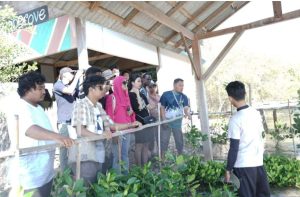
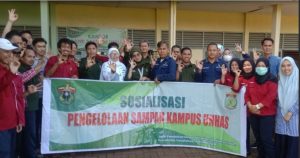
Hasanuddin University offers free outreach to raise awareness about overfishing, illegal and unreported fishing, and destructive practices. The programmes blend science, ethics, and simple technologies that help coastal communities keep catches sustainable, protect nursery grounds, and comply with fishing rules. All activities are provided at no cost as part of Unhas community service.
A faculty team introduced an underwater LED light attractor for lift net fishers in Pinrang. The training explained proper installation, site selection, and operating procedures so fishers shift from inefficient surface lamps to energy saving systems. The session also discussed responsible effort, size selectivity, and how better efficiency can reduce the pressures that lead to overfishing. Attendees included 64 local fishers and village leaders. The team shared evidence that LED systems can increase anchovy catch weight while reducing fuel use for generators. Lower fuel consumption and clearer guidance on when and where to fish help crews avoid risky night operations and unnecessary trips that encourage rule breaking. The practical message is simple. Catch more with less fuel and within the law.
Outreach also covered the ethics of gear placement and the protection of spawning and juvenile habitats. Instructors explained how light-assisted fishing should not be used in restricted zones and how community rules can prevent harmful crowding around artificial aggregating devices. Fishers were encouraged to keep basic logbooks and to report suspicious activity that suggests unreported or illegal fishing.
Under the theme of blue economy for coastal communities, Unhas hosted a public event on Barrang Lompo Island. Sessions introduced seaweed processing for added-value alongside demonstrations of efficient and environmentally friendly fishing gear. This combination showed that income can grow without resorting to banned methods such as explosives, poisons, or compressor based diving. The Barrang Lompo event brought residents, educators, and alumni together to discuss fair access to resources and shared responsibility for reef areas. Facilitators linked simple monitoring tasks with everyday fishing routines, so communities can track trends, spot destructive practices early, and work with local authorities when needed. All sessions and materials were free to participants.
Across both sites, the curriculum centered on three ideas. Use selective and efficient gear, follow seasonal and spatial rules, and keep basic records that make reporting easier. Instructors translated these ideas into checklists and demonstrations so crews can improve practices on their next trips, not in a classroom. The outreach emphasises that legal compliance protects community livelihoods. Presenters clarified the difference between licensed and unlicensed gear, the meaning of restricted areas, and the risks of landing catches without records. Participants practiced scenario-based discussions on what to do when they observe possible violations, including safe steps to document and report incidents.
Unhas also connects fisheries practices with health and education services so families can attend training events without extra costs. The Barrang Lompo event even included free dental checks alongside technology demonstrations, which increased turnout and helped reach more households with messages against destructive fishing. These free programmes will continue to rotate through districts with follow-up mentoring. As crews adopt energy saving lights, respect closures, and record their fishing effort and catches, communities gain better data, safer fishing, and more stable stocks. The result is stronger compliance, less destructive activity, and a clearer path to sustainable catches that support local economies and SDG 14.  14.2.3 Overfishing (community outreach)
Hasanuddin University supports conservation and the sustainable use of oceans, seas, lakes, and rivers through events that move ideas into practice. The focus is simple. Convene partners, share science, and co-design solutions that communities can apply. A key platform is the joint effort between FIKP Unhas, Asia Livelihood Network, and Nishinippon Nichimo Co. The partnership promotes better seaweed farming and plastic waste reduction in coastal villages. It launched with an international symposium that aligned technology, livelihoods, and environmental care for the Sembilan Islands in Sinjai.
The collaboration did not stop at the signing table. A field team stayed a week in island communities to map problems and test options for cleaner seaweed practices and better waste handling. The plan is supported by a one year program to produce workable methods for replication in other coastal communities.
Event-based action also supports species protection. Unhas and the Provincial Government of West Sulawesi marked the hand-over of a multi year marine habitat project to rehabilitate nesting and feeding grounds for turtles in the Balabalakang Islands. The event confirmed continued local engagement and government support after the research phase ended in February 2024.
Sharing knowledge scales the impact. The International Conference on Administrative Science 2024 featured sessions on maritime governance and sustainable development, connecting public policy, community practice, and blue economy goals. The agenda highlighted integrated rules, institutions, and partnerships for long term ocean stewardship.
Unhas also hosted a national and international symposium that placed SDG 14 at the center of the discourse. Speakers examined core challenges in marine and fisheries management and presented practical pathways for solutions that communities can adopt.
These events connect research to policy. Seaweed cultivation is paired with waste reduction so farms remain productive and coasts stay clean. Governance work links marine planning with community monitoring so rules are understood and trusted. Species protection involves local actors who maintain nesting beaches and nearshore habitats after the project banners come down.
The formats used are accessible. Open plenaries, panel forums, field demonstrations, and village dialogues make it easy for students, local leaders, and officers to join. Organisers provide materials and follow-up notes so learning can be repeated in classrooms, village halls, and coastal groups.
Partnerships are the engine. Universities, nongovernment groups, industry, and provincial agencies commit expertise and resources for shared outcomes. This mix supports better fishing gear and aquaculture practices, cleaner harbors and beaches, and stronger local rules for marine protected areas.
By organising and supporting these events, Unhas helps communities and decision makers act for the conservation and sustainable use of marine resources. The pathway is clear. Share knowledge, align policy, involve local actors, and measure outcomes. This is how SDG 14 is translated into daily practice across the archipelago.

Hasanuddin University has established a clear campus policy to ensure that all food served or sold on campus, particularly those sourced from aquatic ecosystems, is responsibly obtained and legally compliant. This commitment is formalized through Circular Letter No. 263/UN4.15/DL.17/2022, updated under University Circular Letter No. 09834/UN4.1/KM.01.03/2024. The directive, addressed to canteen managers and food vendors within the Faculty of Marine Science and Fisheries and across the university, requires that fish and other aquatic ingredients come from environmentally sustainable sources and adhere to national fisheries regulations. By aligning everyday food choices with the principles of sustainable aquatic resource management, this policy reinforces the university’s dedication to responsible stewardship of seas, lakes, and rivers while setting a standard that all campus vendors and event organizers must follow.
The circular sets out a practical frame for vendors. It reminds food providers that aquatic products must not come from harmful fishing or aquaculture methods, and that supply chains must respect the law. By giving simple instructions to canteen operators, the university connects policy to procurement and makes sustainability visible to students and staff at the point of purchase. This also creates a basis for routine checks and dialogue with vendors so the policy is understood and applied consistently.
This policy is reinforced through learning activities that promote quality, safety, and respect for resources. At the Technology of Fishery Products programme, students run practical sessions on-campus to develop value-added fish products while applying processing standards they learn in class. These sessions improve skills in handling, hygiene, and product evaluation and help future professionals understand how responsible sourcing pairs with responsible processing. THP campus practice.
The approach is straightforward. A written rule sets the expectation, and learning by doing builds the culture around it. When students and staff see that campus food is tied to clean supply chains and good practices, sustainability becomes part of daily life. This consistent message supports healthy diets, fair markets for legal fishers, and a reduction in demand for products linked to destructive fishing.
Partnership with the government strengthens the policy environment. Unhas and the Ministry of Marine Affairs and Fisheries signed a cooperation agreement aimed at food security, better management, and investment in the marine and fisheries sector. The agenda focuses on sustainability and responsible growth, which complements the campus policy by promoting traceable and lawful supply chains beyond the university. Unhas–KKP cooperation • Related coverage: Antara • FIKP summary in English.
This collaboration shows how campus policies connect with national direction. When universities adopt procurement rules that prefer legally caught and responsibly harvested fish, they support the same goals pursued by the ministry: stronger food security, better ecosystem outcomes, and clear incentives for lawful producers. The mutual reinforcement between campus demand and policy signals in the wider market encourages suppliers to improve practices.
Implementation depends on simple routines. Event committees and unit managers can check supplier declarations, request basic proof of legality where relevant, and prefer products from certified or community-verified sources when available. Training modules from study programmes can be used to brief canteen operators on species choice, seasonal considerations, and handling that reduces waste. This way, procurement teams turn a short circular into a living practice across faculties.
Education in processing and product development adds another benefit. Students who learn to create value-added products from responsibly sourced fish help reduce pressure on stocks by improving returns per kilogram and by promoting full-use processing. Campus showcases and tasting sessions make this visible, building pride in products that are both safe and sustainable and giving vendors a model to follow.
The procurement policy also supports communication. Posters at canteens can point to the circular and explain what “responsibly sourced” means in simple terms. Vendors can display supplier names and short notes on origin, while the faculty website keeps the circular available for reference. This transparency invites feedback and strengthens trust in campus food services.
Going forward, Unhas can link vendor orientation with broader outreach on sustainable seafood and nutrition, drawing on resources from the ministry partnership. Short refreshers for canteen staff, student volunteer checks during events, and recognition for vendors that meet the standard will keep the policy active. The result is a campus where food choices support sustainable aquatic ecosystems and signal the same expectations to visitors and partners.
In sum, Unhas pursues conservation and sustainable use of aquatic resources not only in classrooms and research labs but also at the dining table. A clear rule for food on campus, practical learning in fish processing, and cooperation with the national ministry together create a coherent pathway from policy to plate. This is how our university turns SDG 14 into daily practice through the food it serves and the professionals it trains.
Hasanuddin University works directly with communities, government, and industry to maintain and extend ecosystems and their biodiversity. The focus is practical action in places under pressure, guided by research and followed by on site implementation. Mangrove rehabilitation, turtle habitat restoration, seaweed based ecosystem services, and responsible use of artificial reefs are all advanced through workshops, field labs, and multi-party collaboration.
Coastal vegetation is restored by community hands. A workshop on coastal rehabilitation in Makassar moved from class to field in the same programme, ending with hands-on planting of mangroves at Untia. Participants learned site selection, nursery handling, and follow up monitoring so the planting would not stop at a photo session. The message was clear. Mangroves protect shorelines, provide nursery habitat, and store carbon, and communities can maintain them with simple routines.
Species conservation is handed over with a plan for continuity. After a three year project in the Balabalakang Islands, Unhas formally transferred a turtle habitat programme to the Provincial Government of West Sulawesi. The program combined coral and seagrass rehabilitation to support nesting and feeding, community engagement for protection, and a roadmap so local agencies can continue patrol, monitoring, and education after the research phase.
Seaweed development strengthens both livelihoods and ecosystem function. Unhas, the South Sulawesi Provincial Government, and the Australia–Indonesia PAIR initiative are advancing seaweed as a tool for clean growth. The approach treats seaweed as both an economic engine and a natural biofilter that supports healthy coastal ecosystems. The collaboration links farmer training, low waste technology, and reduced plastic use in cultivation so farms filter water and avoid adding new pollutants.
Capacity to restore underwater habitats is built through shared learning. Unhas hosted a workshop on marine ecosystem recovery that brought together lecturers, students, practitioners, and officials. Sessions covered assessment of degraded sites, options for restoration, and simple monitoring that communities can maintain. By pairing presentations with open discussion, the event helped translate science into methods people can apply in their own waters.
Artificial reefs are introduced with education on their responsible use. In collaboration with partner universities from China, Unhas delivered training on when and how to use artificial structures to support fisheries without harming natural reefs. The curriculum stressed site suitability, no-take zones around new modules to allow colonisation, and data recording so communities can see what works and adapt placement rules over time.
What ties these initiatives together is the mix of research and field practice. Mangrove plots come with follow up checks, turtle beaches with community protocols, seaweed training with cleaner cultivation guides, and reef modules with monitoring forms. This combination reduces the risk that projects fade after launch and builds local ownership for long term care.
Partnerships make the work durable. Provincial agencies take the lead after handover, village groups handle routine tasks, and universities provide methods and mentoring. Industry and donor partners add resources and technology where appropriate. This arrangement spreads responsibilities in a way that fits daily rhythms of fishing, farming, school schedules, and local governance.
The immediate benefits are visible. Eroded shorelines gain a living buffer, nesting sites are protected and watched, nearshore waters receive the filtration benefit of seaweed lines set up with less plastic, and fish communities begin to return where artificial modules are placed with care. Each site becomes a demonstration of what steady, shared work can deliver for biodiversity.
Unhas will continue to align research with engagement so threatened ecosystems receive the attention and care they need. With practical training, clear handovers, and open reporting, communities can maintain restored areas and extend them over time. This is how direct work on the coast and small islands becomes lasting protection for plants, animals, and the people who depend on them.
 14.3.3 Maintain ecosystems and their biodiversity (direct work)
Hasanuddin University works directly with communities, government, and industry to advance technologies and daily practices that prevent damage to rivers, coasts, and reefs. The priority is to stop pollutants at their source, guide smart infrastructure in sensitive waters, and equip local teams with tools they can operate and maintain. This approach turns research into simple interventions that fit real conditions and protect habitats before harm occurs.
In Pinrang, the Marine Plastic Research Group led field sessions on household waste handling, river interception, and mangrove care along the Kariango River. Residents from three hamlets learned how to sort waste, keep organic and plastic streams separate, and install low cost river trash traps at flow pinch points. Local government acknowledged that sustained mentoring since 2021 has begun to show results, with residents selling sorted plastics and operating a small processing point supported by university teams. The activity closed with the handover of a thousand seedlings to a youth group engaged in mangrove rehabilitation, linking prevention on land with restoration on the shore.
The same outreach connects communities to small industry solutions that keep plastics out of waterways. A local start up demonstrated how to convert plastic bags into usable pouches and trained residents on sorting standards and the operation of simple equipment. This pairing of river-borne waste interception and micro-recycling closes loops at neighborhood scale, reduces leakage to the sea, and creates household income that encourages steady collection rather than dumping or open burning.
To scale prevention beyond single sites, Unhas documents methods and builds a network of partners. A campus feature traces the group’s work from early microplastic findings to a portfolio of river trash traps, student placements, and community waste systems in several districts. By combining equipment with routines for collection and reporting, the programme helps villages track what is captured, who maintains the trap, and where recovered plastics go for reuse, which keeps the technology active rather than abandoned after a pilot project.
International partners reinforce by sharing survey and evaluation methods that keep projects accountable. A Shanghai Ocean University brief highlights expert support for Indonesian artificial reef efforts and encourages practical evaluation so local rules on gear, effort, and no take periods can be adjusted based on observed recovery, not on assumptions. This keeps infrastructure aligned with prevention goals rather than becoming a one time installation.
The design philosophy across these technologies is to keep tools simple and serviceable. Trash traps are built from available materials and placed where currents concentrate debris. Recycling tools match local feedstock and skills. Reef modules are deployed with clear boundaries and basic monitoring sheets that community teams can complete after fishing trips or patrols. The result is a set of interventions that communities can operate without waiting for outside technicians, which improves durability and trust. Reef deployment note.
Communication is treated as part of the technology package, not a separate activity. Public briefings, riverbank meetings, and campus media keep attention on prevention and show how small steps add up when many households repeat them. University features invite new collaborators and document what worked and what did not, which lets other districts adopt traps, sorting routines, and product making with less trial and error.
These efforts link land and sea in a single prevention chain. Rivers lose less plastic because traps and sorting divert waste into reuse and sale. Mangroves gain space to grow because litter smothering is reduced and communities revisit sites after planting. Nearshore waters receive a lift from reef structures placed with care and managed with fair, locally accepted rules. Each element fits the daily rhythms of fishing, schooling, market days, and village meetings, which keeps prevention active rather than episodic.
Going forward, Unhas will continue to align industry engagement, student fieldwork, and partner support so prevention becomes routine across South Sulawesi. The path is clear. Stop waste before it reaches the sea, restore natural buffers that filter and anchor sediments, and place infrastructure that improves habitat while respecting natural reefs. With open reporting and shared learning, the model is ready to expand to other districts and islands.
 14.3.4 Technologies towards aquatic ecosystem damage prevention (direct work)
Unhas’ Commitment to Water Quality Protection and Sustainable Waste Management
Universitas Hasanuddin (Unhas) is deeply committed to upholding high water quality standards to protect ecosystems, wildlife, and public health. This dedication is evident in the adoption of national regulations and the creation of internal institutional policies. In accordance with Ministerial Regulation No. P.68/Menlhk/Setjen/Kum.1/8/2016, Unhas has formalized internal guidelines through Rector’s Decree No. 10029/UN4.1/KEP/2022 and Circular Letter No. 13826/UN4.1/RT.03.01/2024 on Hazardous and Toxic Waste Disposal. These policies emphasize sustainable water use and conservation while strictly regulating hazardous waste management. Toxic water can only be disposed of in facilities with specific permits from relevant authorities. Dumping hazardous waste into water systems, open land, or general trash bins is strictly prohibited. All disposal activities must comply with existing national legislation, particularly regulations from the Ministry of Environment and Forestry, and staff are required to fully understand and adhere to these rules.
Beyond regulatory compliance, Unhas takes a proactive approach by fostering continuous improvements in sustainable water management. The university contributes to community health initiatives, such as applying Electrical Resistivity Tomography (ERT) to map groundwater resources in Bulukumba Regency. This innovation ensures reliable access to clean water and helps reduce the risk of stunting in children. Additionally, Unhas supports student-driven innovations in water purification. One such example is the development of a corncob-based filtration device that transforms agricultural waste into a low-cost water purifier. This initiative not only addresses water quality challenges but also promotes circular economy principles by turning waste into valuable resources. Through these combined efforts in policy enforcement, technological innovation, and community engagement, Unhas demonstrates a holistic commitment to protecting water resources and promoting sustainable development.
Strengthening Unhas’ Commitment to Sustainable Waste Management
Hasanuddin University is rolling out a practical action plan to reduce plastic waste across faculties, events, and student programmes. This initiative is reinforced by Circular Letter No. 09246/UN4.1/KM.01.03/2024, which prohibits the use of single-use plastic water bottles and plastic bags on campus. The plan combines policy direction with hands-on implementation to ensure that sorting, collection, and reuse take place at the point where waste is generated. It links classroom learning, campus operations, and outreach, and it uses pilot activities as models that other units can copy with little cost. Kemahasiswaan Unhas
A cornerstone of the plan is education by doing. During the 2024 student induction, new students learned to sort event waste at the venue. Organisers prepared stations for plastics, organics, and cardboard, and partnered with the city’s waste bank network to ensure materials went to responsible processors. The induction became a live demonstration that large events can manage waste well and set a standard for future gatherings on campus. Unhas TV report
Faculty-led initiatives reinforce these routines. At the Faculty of Public Health, students launched a campus sorting programme as part of an environmental quality course. The launch formalised simple steps for reduction and separation at source, supported by faculty backing and student champions who track progress and share lessons with other units.
The action plan also strengthens collection systems. The campus Waste Bank Working Group conducts regular socialisation sessions so each unit understands how the waste bank operates, what materials it accepts, and how to record transactions. Recent sessions at the Faculty of Forestry and other faculties focused on practical workflows and roles, moving beyond awareness toward day to day implementation.
Student community service adds a creativity track to the plan. A KKN team ran a workshop that invited school students to live without plastics by practicing simple swaps, reuse, and local upcycling ideas. The session encouraged habit change at home and in school events, and it produced replicable teaching aids that other KKN teams can carry to new sites.
Operationally, the plan connects event management with the waste bank and local partners. Sorting points are placed where waste is created, volunteers guide participants, and plastic and cardboard flows are sent to the city’s central waste bank while organics go to local farms. This keeps plastic out of mixed bins and reduces the burden on municipal services after campus events.
The plan advances culture change inside faculties. The Waste Bank Working Group now visits departments on a rolling schedule to help set up sorting points, clarify standard operating procedures, and collect feedback on barriers. Coverage from campus and local media shows growing participation from staff and students as waste sorting becomes a routine part of daily life.
Learning outputs are fed back into operations. When students design sorting signage, measure event waste, or test reuse ideas, the best materials are adopted by units and used again. In Public Health, the sorting programme is paired with steps to reduce single use plastics at seminars, which demonstrates how coursework and campus management can reinforce each other.
Action on plastic also extends to habits outside lecture halls. Through KKN and student clubs, Unhas promotes practical behavior change such as bringing tumblers to events, refilling rather than purchasing bottles, and switching to reusable packaging for student activities. By placing youth-led workshops in schools and communities, the university grows a pipeline of new participants who understand sorting and reduction before they arrive on campus.
With ongoing mentoring and regular reporting, the action plan creates a loop that starts with education, moves through event and unit operations, and ends with measurable reductions in plastic sent to mixed bins. The combination of faculty pilots, event models, and waste bank engagement gives Unhas a clear pathway to keep shrinking plastic waste each semester while supporting the broader goals of a green campus.

Unhas Policy and Community Action for Marine and Environmental Protection
Hasanuddin University has adopted a clear campus Circular Letter No. 28720/UN4.1/KM.01.03/2024 for preventing and reducing pollution that reaches rivers, estuaries, and coastal waters. The directive sets expectations for all units to prevent waste at source, segregate materials properly, store chemicals safely, and work only with licensed handlers. It also prohibits any discharge of pollutants to drains or natural waterways and aligns procedures with national law so compliance is routine and enforceable. The document is written for easy adoption in laboratories, workshops, clinics, and event planning, and is publicly available for reference by staff and students.
Policy is paired with education that turns rules into daily habits. The Department of Marine Science delivered outreach at PPLH Puntondo in Takalar on plastic pollution and the domestication of seaweed. The session linked household and campus source control with coastal practice, showing how better sorting, safe storage, and clean handling reduce leakage to the sea, while good seaweed cultivation supports livelihoods and healthier nearshore waters. This learning-by-doing approach helps students and communities understand why prevention upstream matters for ecosystems and coastal economies downstream.
Implementation is kept practical. Units can use the circular to build simple checklists for chemical storage, spill response, and event waste sorting, then record routine indicators such as the number of events with sorting stations and volumes sent to licensed handlers. When issues arise, managers have a clear basis for corrective action and refresher briefings. Together, the campus circular and targeted outreach create a coherent pathway from rule to routine: prevent leakage on land, keep pollutants out of drains, and support coastal groups with clean practices that reduce marine pollution at its source.
Unhas Integrated Plan to Protect Aquatic Ecosystems and Reduce River Pollution
Universitas Hasanuddin (Unhas) has established a comprehensive and integrated plan to safeguard aquatic ecosystems and mitigate river pollution, underscoring its strong commitment to environmental sustainability. This initiative is guided by the Circular Letter No. 41699/UN4.1/KM.01.03/2022, later refined through Circular Letter No. 28720/UN4.1/KM.01.03/2024 on the Protection and Prevention of Marine and Terrestrial Pollution. Together, these policies provide an institutional framework for minimizing human-induced physical, chemical, and biological impacts on marine and freshwater environments.
In collaboration with the Provincial Government of South Sulawesi, the Faculty of Marine Science and Fisheries (FIKP) is developing a Zoning Plan for the Bone Bay Conservation Area. Through this zoning plan, Bone Bay is expected to become a conservation area that protects coastal and marine biodiversity and supports sustainable development in the marine and fisheries sectors across South Sulawesi. This initiative represents a strategic step toward the sustainable management of coastal and marine resources, aiming to preserve biodiversity while supporting the long-term socio-economic development of fisheries and marine sectors in South Sulawesi.
Unhas has partnered with the Maros Regency Government since 2023 to implement the Trash Trap Program, a pioneering effort designed to intercept plastic waste in upstream river areas before it reaches downstream ecosystems and coastal zones. Following its success, the program has been expanded to multiple regions, including Pinrang, Bone, and Makassar, positioning Unhas as a leading institution in reducing river-based pollution that threatens aquatic biodiversity in Indonesia.
The Trash Trap initiative not only addresses the accumulation of plastic waste but also mitigates the chemical contamination caused by the degradation of plastics into microplastics and toxins. Ecologically, it contributes to restoring the biological balance by protecting aquatic habitats and species from pollution-related threats.

Unhas Strengthens Aquatic Ecosystem Health Monitoring through Conservation, Research, and Community Collaboration
Universitas Hasanuddin (Unhas), through the Faculty of Marine Science and Fisheries (FIKP), continues to strengthen its commitment to aquatic ecosystem health monitoring by combining conservation, research, and community collaboration. In December 2024, FIKP conducted monitoring of marine and terrestrial biota in Pulau Pakal, Pulau Gee, and Tanjung Buli, East Halmahera, near nickel mining operations of PT ANTAM Tbk NMNM and PT Sumberdaya Arindo. The monitoring assessed changes in flora and fauna, covering seagrass, macroalgae, nekton, plankton, benthos, coral reefs, and terrestrial species. According to Prof. Chair Rani, the findings provide valuable references for companies to adopt preventive and corrective measures in mitigating mining impacts.
Complementing this effort, Unhas students from the Student Association of Aquatic Resources Management (MSP) under the Fisheries Student Family (Kemapi) held a Seagrass Expedition to Pulau Bangko-bangkoang, Satando, and Kulambing. The program engaged 88 students in seagrass data collection, ecological analysis, and coastal clean-up with the local community, reinforcing both scientific capacity and environmental awareness.
Through these integrated initiatives, Unhas demonstrates its holistic role in monitoring ecosystem health while actively engaging industry, researchers, and students in protecting marine and coastal biodiversity.

Unhas Strengthens Good Aquatic Stewardship Practices
Hasanuddin University (Unhas) continues to demonstrate its commitment to marine ecosystem sustainability through collaboration with local governments. Together with the South Sulawesi Provincial Government and supported by the Australia–Indonesia Centre Partnership for Australia–Indonesia Research (PAIR), Unhas has developed a seaweed cultivation program. This initiative not only aims to improve the welfare of coastal communities but also plays a vital role in maintaining water quality, absorbing carbon, and providing natural habitats for marine life.
In addition, Unhas has partnered with the West Sulawesi Provincial Government to carry out sea turtle habitat conservation. Throughout the implementation and official handover of this conservation program, Unhas demonstrated its concern for protecting endangered marine species. Sea turtles, as key indicators of ocean health, have become a central focus in preserving coastal ecosystem balance.
These initiatives reflect good aquatic stewardship practices that balance economic, ecological, and sustainability interests. With such concrete actions, Unhas positions itself as a pioneer in supporting the achievement of sustainable development goals in Eastern Indonesia.
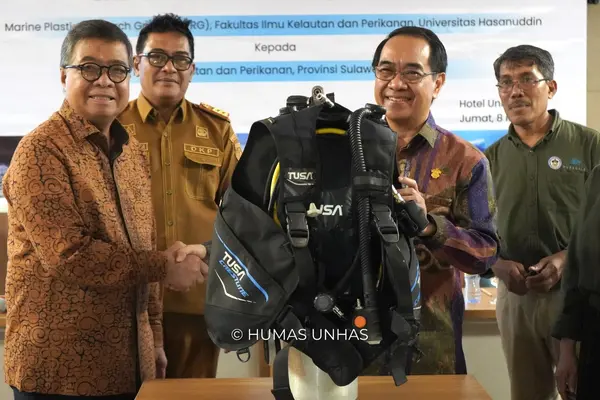 14.5.3 Programs towards good aquatic stewardship practices
Unhas and Community Partnerships for Sustainable Aquatic Ecosystems
Unhas is committed to safeguarding shared aquatic ecosystems through close collaboration with local communities. Together with the Provincial Government of South Sulawesi and the Partnership for Australia–Indonesia Research (PAIR), Unhas promotes sustainable seaweed cultivation to strengthen local economies while protecting marine ecosystems.
The Department of Marine Science at the Faculty of Marine and Fisheries Science also conducts outreach programs at the Environmental Education Center (PPLH) in Puntondo Village, Takalar, to build community awareness and capacity in marine conservation.
Unhas further strengthens community engagement through digital initiatives, working with Swinburne University of Technology and the Yayasan Konservasi Laut (YKL) Indonesia. This collaboration provides coastal communities in South Sulawesi with improved access to environmental data and supports sustainable resource management.
Through these partnerships, Unhas actively promotes biodiversity conservation, sustainable livelihoods, and long-term ecological stewardship across Indonesia.
In alignment with Unhas through Master Plan 2018-2030 and later be updated thorugh Circular Letter 59419/UN4.1/PR.00.00/2024 (Master Plan 2024-2044), Hasanuddin University (UNHAS) has proactively implemented a comprehensive watershed management strategy on its campus, designed to address the specific ecological characteristics and biodiversity of its surrounding aquatic ecosystems.
A key component of this approach is the establishment of Green Open Spaces (Ruang Terbuka Hijau/RTH), covering 47.123 hectares, which constitutes 31.83% of UNHAS’s total land area. These green zones are strategically developed to support ecological balance, improve water absorption, and enhance the sustainability of the campus’s 9.763-hectare lake system. This lake system plays a critical role in supporting a wide range of aquatic species, making it a vital part of the campus’s wetland ecosystem.
The watershed management initiative reflects UNHAS’s strong commitment to environmental responsibility, with a particular emphasis on the preservation of aquatic species and their habitats. By recognizing the importance of location-specific biodiversity, UNHAS ensures that each component of the ecosystem (flora, fauna, water quality, and topography) is considered in the design and execution of sustainable management practices.
Beyond the campus, UNHAS actively collaborates with external stakeholders (LPPM) to expand the impact of its environmental initiatives through the Institute for Research and Community Service. A notable example is the partnership with PT Vale Indonesia Tbk in a tree-planting project around Toraja Airport in Mengkendek Sub-district, Tana Toraja Regency. This initiative supports the rehabilitation of the watershed area, contributing to ecosystem restoration and climate resilience in the region.
In the field of research, UNHAS continues to contribute to watershed and aquatic ecosystem management through specialised units such as the Forest Hydrology and Watershed Management Research Group, accessible at https://trg.unhas.ac.id/secrg/. This center supports data-driven, location-specific research and development activities, enhancing knowledge and practices related to river and groundwater sustainability.